Analysis of determinants of voter turnout in Indian states for election years 1991–2019
Menon, S. M., & Rassendren, G. (2022). Journal of Social and Economic Development, 24, 30–45. https://doi.org/10.1007/s40847-022-00179-z.
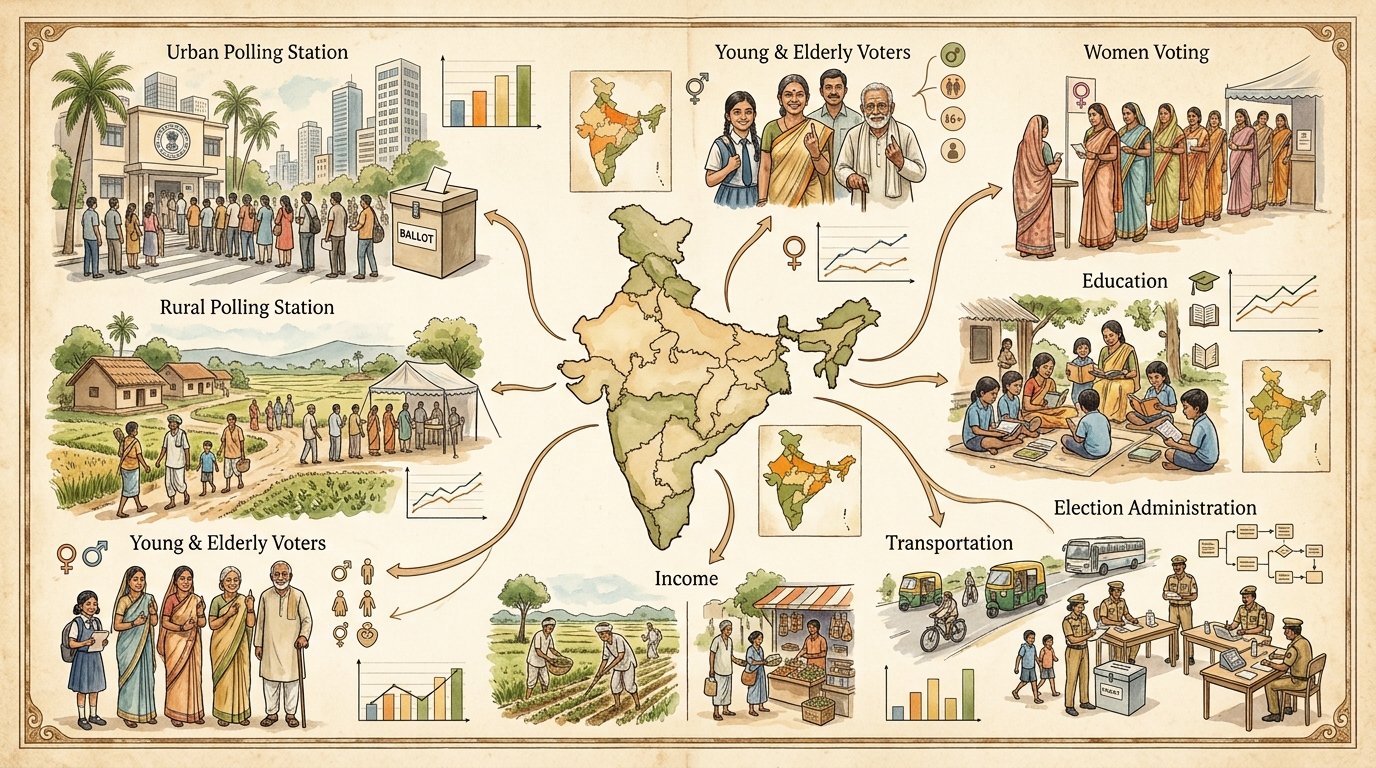
This sophisticated longitudinal study utilizes panel regression and fixed effect models to dissect the economic underpinnings of electoral participation in the world’s largest democracy. Grounded in Rational Choice Theory, the authors examine how economic forces—specifically per-capita income, employment, and even climatic variables like monsoon patterns—influence the utility a voter derives from the ballot. A central and provocative finding is the identified “educated apathy” paradox: higher literacy rates and urbanization do not consistently correlate with higher turnout; in fact, increased literacy was associated with a slight reduction in participation across some models. This suggests that as cognitive ability and information access increase, so too may political cynicism or the perceived opportunity cost of voting, a significant departure from traditional modernization theories.
The evidence presented offers profound insights for the broader South Asian context, particularly for Pakistan, where structural barriers and economic shocks similarly dictate political life. The positive correlation between employment, income, and turnout suggests that a stable middle class is a prerequisite for a vibrant, participatory democracy. For a nation like Pakistan, which frequently grapples with high inflation and income inequality, these findings imply that voter disenfranchisement is often a rational response to economic adversity rather than a simple lack of civic awareness. The study underscores that “free and fair” elections require more than just ballot integrity; they require a socio-economic environment where the sovereignty of the voter is backed by tangible material security.
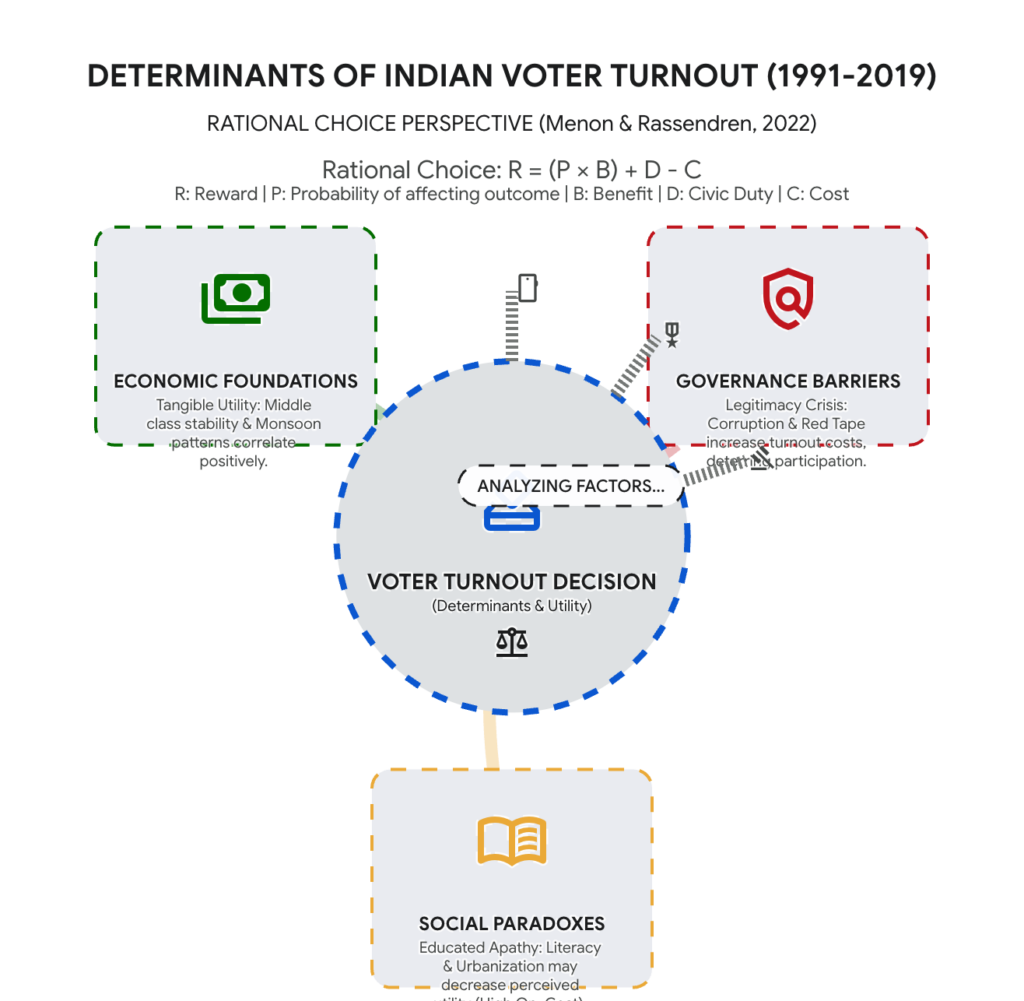
In an era where developing democracies are facing a persistent legitimacy crisis, understanding the drivers of voter abstention is more critical than ever. The research highlights that systemic issues such as bureaucratic loopholes, corruption, and inefficient governance are potent deterrents that can neutralize the “festivity” of the electoral process. As Pakistan navigates its own complex political transitions, this study serves as a vital reminder that the legitimacy of a democratic system is inextricably linked to its ability to provide economic utility to its citizens. It challenges the notion that low turnout is merely a sign of regional backwardness, revealing instead that it is often a symptom of a governance gap that transcends literacy.
This rigorous framework provides an excellent template for future scholars to investigate the nuanced interplay between digital mobilization and traditional economic determinants. While this study expertly maps the impact of physical monsoons on voter revenue and participation, subsequent research could explore “digital monsoons”—the deluge of social media information and its effect on the perceived utility of voting in developing nations. There is significant potential to expand this methodology to include the role of the judiciary and the military in shaping voter confidence. By continuing to build upon this empirical foundation, fellow researchers can deepen our collective understanding of South Asian political behavior, ensuring our democratic theories remain as dynamic and resilient as the populations they represent.