Paying the Price for Patronage: Electoral Violence in Sri Lanka
A. (2009). Commonwealth & Comparative Politics, 47(3), 287–307. DOI: 10.1080/14662040903090807.
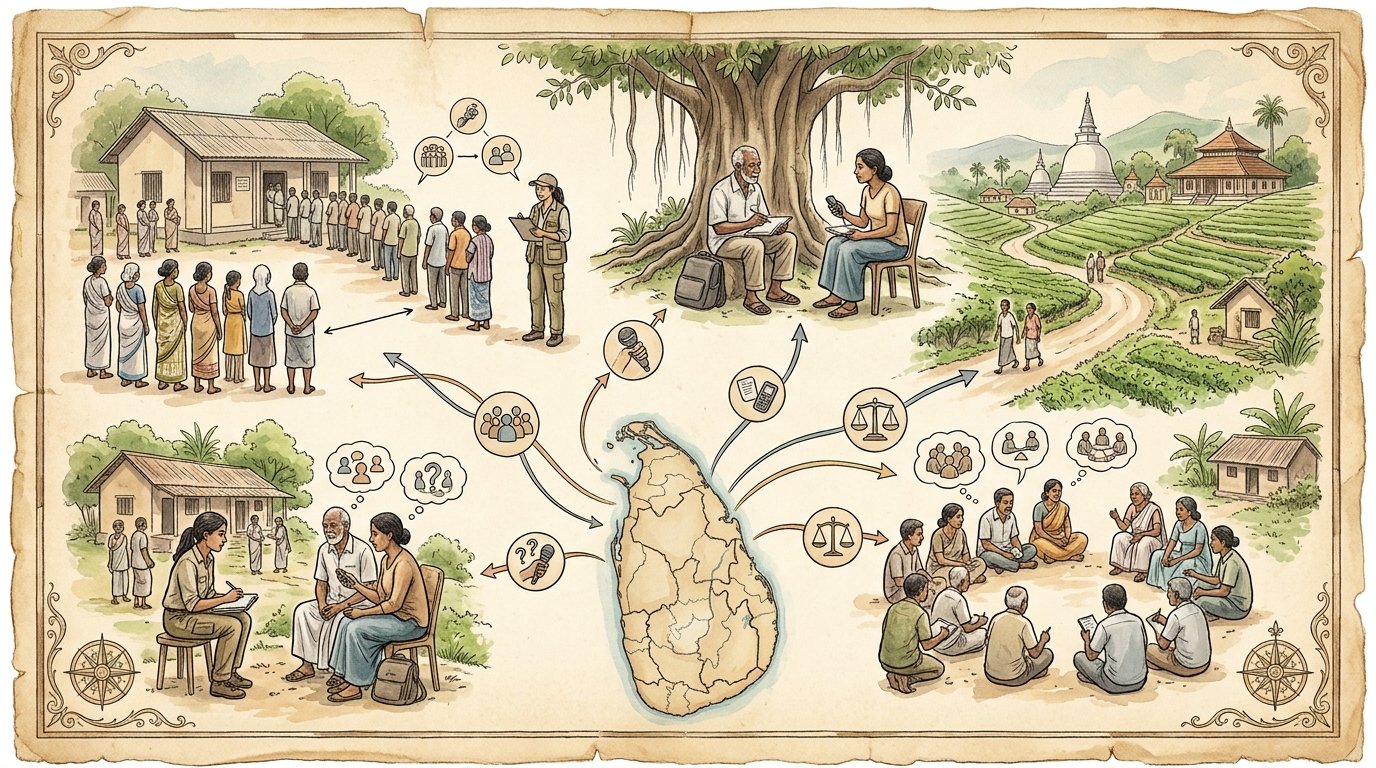
This granular case study utilizes unique qualitative data from in-depth interviews at the village level in Sri Lanka’s Kandy District to unpack the local dynamics of endemic electoral violence. By moving beyond national-level aggregates to focus on the perspectives of victims, the authors reveal that violence is a highly instrumental tool used to suppress opposition votes and demonstrate party loyalty within a patronage-based political culture. The research identifies a critical socio-economic asymmetry in victimization: while local elites often leverage their connections to influential politicians or the security apparatus to escape harm, lower-class activists bear the brunt of physical assaults, arson, and intimidation. This violence, often outsourced to “outside thugs” to maintain local plausible deniability, has fundamentally shifted the electoral experience in rural communities from a communal “joyful” event to one characterized by lingering fear and restricted mobility.
The implications of this study are profound for understanding political behavior in developing nations like Pakistan, where the politicization of essential life opportunities creates a high-stakes environment for electoral competition. When access to jobs, contracts, and welfare is contingent upon visible political loyalty, violence becomes a rational—albeit destructive—strategy for both incumbents seeking to maintain power and challengers attempting to overcome resource asymmetries. The research suggests that state patronage serves as a catalyst for violence, as party supporters may instigate conflict to prove their utility to patrons, effectively turning the democratic process into a mechanism for resource extraction rather than representative governance. Ultimately, this environment traps citizens in “party labeling” and rigid socialization, where the cost of changing political affiliation can be physical or economic retaliation, reinforcing a cycle of political decay.
In today’s climate of persistent legitimacy crises in hybrid regimes, this work remains essential for diagnosing why institutional reforms often fail to curb violence when the underlying “politics of patronage” remains intact. As seen in contemporary South Asian electoral cycles, the erosion of public trust in the political system is often a direct result of the fear and frustration lingering years after election day. The study demonstrates that when the police and judiciary are perceived as partisan tools of the incumbent party, the resulting climate of impunity neutralizes the intended purpose of the ballot box. For the modern Pakistani context, this underscores that genuine democratic consolidation requires more than just regular elections; it necessitates the insulation of state administrative functions from partisan manipulation to protect the most vulnerable voters.
This landmark research provides a fertile starting point for fellow scholars to investigate how emerging digital platforms might disrupt—or potentially reinforce—traditional patronage networks and violent mobilization. While this study expertly maps physical violence and interpersonal fear, future scholarship should explore the intersection of digital socialization and electoral safety, specifically how online transparency and real-time monitoring might mitigate the “impunity gap” described by the authors. There is significant potential to build on this framework by conducting comparative longitudinal studies on the role of non-state actors and civil society in providing security when state institutions fail to remain neutral. By continuing to investigate these local-level dynamics, we can inspire a new generation of comparative political scientists to develop more resilient models for democratic stability that “pay a lower price” for political engagement.